
Solar energy is no longer just a futuristic concept in Pakistan—it’s becoming a practical and cost-effective solution for homes, businesses, and industries across the country. With rising electricity tariffs and frequent power outages, more Pakistanis are turning to solar power to reduce their monthly bills and enjoy uninterrupted electricity. From rooftop solar systems to commercial-scale solar setups, the adoption of clean energy is steadily growing nationwide.
When planning your solar investment, one of the most important metrics to understand is the cost per watt. Calculating this helps you determine the true value of a solar system, compare different brands and panel types, and plan your budget effectively. Knowing the cost per watt also allows you to estimate your return on investment (ROI) and make informed decisions about long-term savings.
Why Cost Per Watt Matters
Every solar panel has a rated power output, usually measured in watts, which indicates how much electricity it can generate under ideal conditions. The cost per watt is simply the total price of the system divided by the total wattage. By calculating this, you can:
-
Compare Tier-1 and Tier-2 solar panels to find the best value for money.
-
Evaluate hybrid solar systems and battery options for your home or business.
-
Estimate payback periods and energy savings over time.
-
Make smart financial decisions without overpaying for underperforming panels.
In Pakistan, the price of solar panels can vary widely depending on the brand, efficiency, and quality of components. By understanding the cost per watt, you can choose a system that fits both your energy needs and budget.
What Is Cost Per Watt in Solar Panels?
When it comes to solar energy, understanding the cost per watt is essential for anyone planning a solar installation—whether for a home, office, or commercial project. In simple terms, the cost per watt (PKR/W) refers to the price you pay for every watt of electricity a solar panel can generate under standard test conditions. It’s calculated by dividing the total price of your solar system by its total wattage.
For example, if a 5 kW solar system costs PKR 700,000, the cost per watt would be:
PKR 700,000 ÷ 5000 W = PKR 140 per watt
Why Cost Per Watt Matters
Knowing the cost per watt helps you make informed decisions and compare different solar panels and brands. It’s not just about the upfront cost—this metric also gives you insight into the long-term return on investment (ROI), potential savings on electricity bills, and overall system efficiency.
For residential projects, it ensures you’re getting a system that meets your energy needs without overspending. For commercial or industrial setups, cost per watt is even more critical, as it affects large-scale budgeting, financing, and the payback period.
By understanding solar energy cost calculation and tracking the PV module price per watt, you can plan a system that balances quality, efficiency, and affordability, helping you make a smart investment in renewable energy.
Factors That Affect Cost Per Watt in Pakistan
When planning a solar installation in Pakistan, the cost per watt isn’t a fixed number. Several factors influence it, and understanding them can help you make smarter decisions for both residential and commercial projects.
Solar Panel Type
The type of solar panel you choose is one of the biggest determinants of cost per watt.
-
Monocrystalline panels are highly efficient and have a longer lifespan but usually come with a higher price per watt.
-
Polycrystalline panels are slightly less efficient but more affordable, offering a balance between cost and performance.
-
Thin-film panels are lightweight and flexible but tend to have lower efficiency, making them suitable for niche applications rather than high-energy needs.
The choice of panel affects not only your upfront investment but also your long-term savings. More efficient panels may cost more per watt but generate more electricity over time, improving ROI.
Solar System Size
The size of your solar system also impacts the cost per watt.
-
Residential systems typically range from 1 kW to 10 kW.
-
Commercial systems can go up to 50 kW or more.
-
Industrial systems often exceed 100 kW.
Larger systems benefit from economies of scale, which can lower the per-watt cost compared to smaller installations. Essentially, as your system’s capacity increases, the overall cost per watt tends to decrease, making bigger setups more cost-efficient in the long run.
Components Included in Calculation
The cost per watt isn’t just about the panels. It also includes other essential components:
-
Inverters to convert DC to AC electricity.
-
Batteries for energy storage in hybrid or off-grid systems.
-
Mounting structures to securely install panels.
-
Wiring and other electrical components.
The quality and type of these components can significantly affect the total system cost, so it’s important to consider all elements when calculating cost per watt.
Installation & Labor Charges
Finally, installation and labor charges vary across Pakistan. Cities like Karachi, Lahore, and Islamabad may have higher rates compared to smaller towns, while regional differences in Punjab and Sindh can affect overall pricing. Hiring professional installers ensures a safe and efficient setup but will also be reflected in the final cost per watt.
By understanding these factors—panel type, system size, components, and installation costs—you can accurately estimate your solar project’s budget and make a well-informed investment in clean energy.
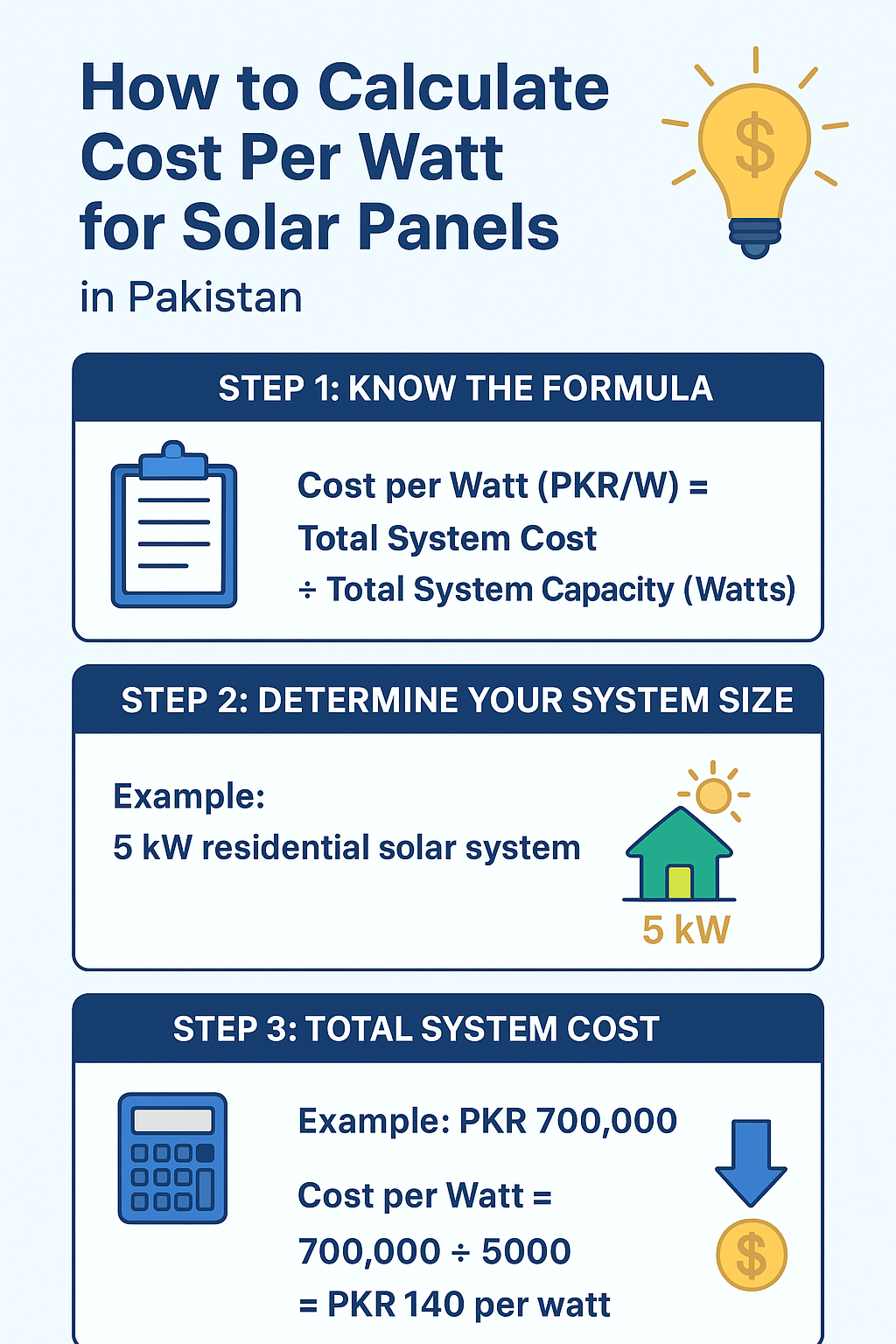
Step-By-Step Guide to Calculate Cost Per Watt
Understanding the cost per watt of a solar system is crucial for planning your investment in Pakistan. Calculating it helps you compare different systems, assess ROI, and budget your project effectively. Here’s a simple, step-by-step guide to make it easy.
Step 1: Know the Formula
The formula to calculate cost per watt is straightforward:
Cost per Watt (PKR/W) = Total System Cost ÷ Total System Capacity (Watts)
This includes not just the panels but also inverters, batteries, mounting structures, wiring, and any installation charges.
Step 2: Determine Your System Size
Before calculating, you need to know your system’s total capacity. For example:
-
A 5 kW residential solar system is common for homes in Pakistan.
-
5 kW equals 5000 watts, which is the number we’ll use in our calculation.
Choosing the right system size is part of solar system sizing and cost planning, ensuring you meet your energy needs without overspending.
Step 3: Total System Cost
Let’s say the total cost of a 5 kW system in Pakistan is PKR 700,000, which includes panels, inverter, batteries, mounting, wiring, and labor.
Step 4: Perform the Calculation
Using the formula:
Cost per Watt = 700,000 ÷ 5000 = PKR 140 per watt
This means you’re paying PKR 140 for every watt your system can generate.
Step 5: Use the Cost per Watt to Compare Options
Once you have the PKR per watt, you can easily compare:
-
Different brands of solar panels
-
Panel types like monocrystalline vs polycrystalline
-
Different system capacities or hybrid vs grid-tied systems
Understanding this metric ensures you make a cost-effective and energy-efficient investment for your home or business.
Common Mistakes When Calculating Cost Per Watt
Calculating the cost per watt of a solar system might seem simple, but many homeowners and businesses in Pakistan make mistakes that can lead to unexpected expenses or lower returns. Understanding these pitfalls can help you make smarter decisions and get the most value from your solar investment.
Ignoring Hidden Costs
One of the biggest mistakes is focusing only on the price of solar panels while ignoring additional costs. A complete solar system includes:
-
Batteries for energy storage, especially in hybrid or off-grid setups
-
Inverters and mounting structures
-
Wiring and installation charges
-
Maintenance and permits
Failing to account for these hidden costs can make a system seem cheaper than it really is, affecting your overall solar system ROI.
Comparing Brands Without Considering Efficiency and Warranty
Another common error is comparing solar panels solely on price per watt. Not all panels are created equal—efficiency, durability, and warranty play a crucial role.
-
Solar panel lifespan and warranty affect long-term performance and potential replacement costs
-
High-efficiency panels may cost more upfront but produce more electricity over time, lowering your effective cost per watt
-
Ignoring these factors can lead to buying cheaper panels that underperform or require early replacement
By keeping these mistakes in mind, you can calculate a more accurate PKR per watt and choose a solar system that truly balances cost, efficiency, and long-term savings.
Tips to Reduce Cost Per Watt in Pakistan
Investing in solar energy is a smart move, but everyone wants to get the most value out of their system. Luckily, there are practical ways to lower the cost per watt without compromising efficiency or quality.
1. Bulk Purchase of Panels and Inverters
Buying solar panels and inverters in bulk can significantly cut costs. Suppliers in Pakistan often offer discounts for large orders, which is especially beneficial for commercial setups. Not only does this reduce your upfront investment, but it can also save you on installation and shipping fees. Businesses planning larger solar systems can maximize savings by coordinating purchases all at once.
2. Considering Hybrid Solar Systems for Energy Efficiency
Hybrid solar systems are gaining popularity in Pakistan because they combine solar panels with grid or battery backup. By storing excess energy and using it during peak hours, hybrid systems optimize electricity usage and reduce wastage. This not only lowers your monthly electricity bills but also improves the overall efficiency of your system, effectively reducing your cost per watt in the long run.
Implementing these tips allows homeowners and businesses alike to enjoy the benefits of solar energy while keeping expenses in check. Smart planning and strategic investment are key to making your solar journey both cost-effective and sustainable.
FAQs
What is the average cost per watt for residential solar panels in Pakistan?
The cost per watt for residential solar panels in Pakistan generally ranges between PKR 180 to PKR 250 per watt depending on system size, brand, and quality. Additional components like inverters and batteries can slightly increase the total cost, so it’s important to consider the complete setup when calculating the price per watt.
Does the type of solar panel affect cost per watt?
Yes, the type of solar panel plays a big role in determining cost per watt. Tier-1 panels, known for higher efficiency and durability, are more expensive upfront but offer better long-term savings. Cheaper panels may cost less initially but could lead to higher maintenance and lower energy output over time.
Can hybrid solar systems reduce the overall cost per watt?
Hybrid solar systems, which integrate solar panels with battery storage or grid support, can lower the effective cost per watt. By storing excess energy and using it during peak hours, these systems maximize energy efficiency, reduce electricity bills, and improve the overall return on investment.
How often should I recalculate the cost per watt for my solar system?
It’s recommended to recalculate cost per watt whenever you upgrade your system—such as adding more panels, switching to hybrid setups, or replacing old components. Doing so helps you track system efficiency, optimize energy usage, and plan for future expansions effectively.
Conclusion
Calculating the cost per watt is one of the most important steps when planning a solar installation in Pakistan. It helps you understand the true value of your investment, compare different panels and systems, and plan your budget effectively. Accurate calculations ensure that you’re not just buying a solar system but making a smart, long-term energy solution for your home or business.
To get the best results, always compare quotes from multiple suppliers and consider all factors, including panel efficiency, warranty, installation charges, and hidden costs like batteries or maintenance. This way, you can make an informed decision that balances cost, performance, and reliability.
If you’re ready to take the next step, consult local solar installers or request a quote to find the perfect system for your energy needs. Investing in solar energy is not just about savings—it’s about embracing a cleaner, sustainable future while reducing your electricity bills.