Pakistan is steadily embracing solar energy as a reliable solution to its growing electricity demands. With frequent load shedding and rising energy costs, more homes and businesses are turning to renewable energy sources to ensure uninterrupted power supply. Solar energy Pakistan is no longer just an eco-friendly choice—it’s becoming a smart financial decision.
Choosing the right solar panel tier is crucial for maximizing efficiency, durability, and return on investment (ROI). Not all solar panels are created equal, and understanding the difference between Tier-1 and Tier-2 solar panels can save you both money and frustration in the long run. Tier-1 panels are known for superior performance, higher efficiency, and long-term reliability, while Tier-2 panels may offer lower upfront costs but could compromise on lifespan and output.
In this guide, we’ll break down the key differences between Tier-1 vs Tier-2 solar panels, helping you make an informed decision for your home or business in Pakistan’s dynamic renewable energy market.
Whether you’re looking to reduce electricity bills, invest in a commercial solar system, or simply explore sustainable energy options, understanding these tiers will empower you to choose the right solution.
What Are Tier-1 and Tier-2 Solar Panels?
When it comes to investing in solar energy Pakistan, not all solar panels are created equal. Understanding the difference between Tier-1 and Tier-2 solar panels can make a significant impact on your energy efficiency, panel durability, and long-term ROI. Let’s break it down.
Definition of Tier-1 Solar Panels
Tier-1 solar panels are considered the gold standard in PV module quality ranking. These panels are produced by high-efficiency, globally certified solar panel brands Pakistan, known for their consistency, reliability, and performance. They offer longer warranties, often 25 years or more, and maintain their efficiency over time, making them ideal for both residential and commercial installations.
Example brands: Trina Solar, Jinko Solar, Canadian Solar.
With Tier-1 panels, you can expect higher panel durability and lifespan, meaning fewer replacements, better energy output, and ultimately, a smarter investment for the long term.
Definition of Tier-2 Solar Panels
Tier-2 solar panels are more budget-friendly options commonly used in Pakistan, making them appealing for small-scale projects or initial solar experiments. However, they may have lower efficiency compared to Tier-1 panels and typically come with shorter warranties, often 10–15 years. These panels can degrade faster over time, which can affect energy production and long-term savings.
While Tier-2 panels are widely available and suitable for those with upfront cost limitations, choosing them requires careful consideration of expected panel durability and lifespan to avoid costly replacements down the road.
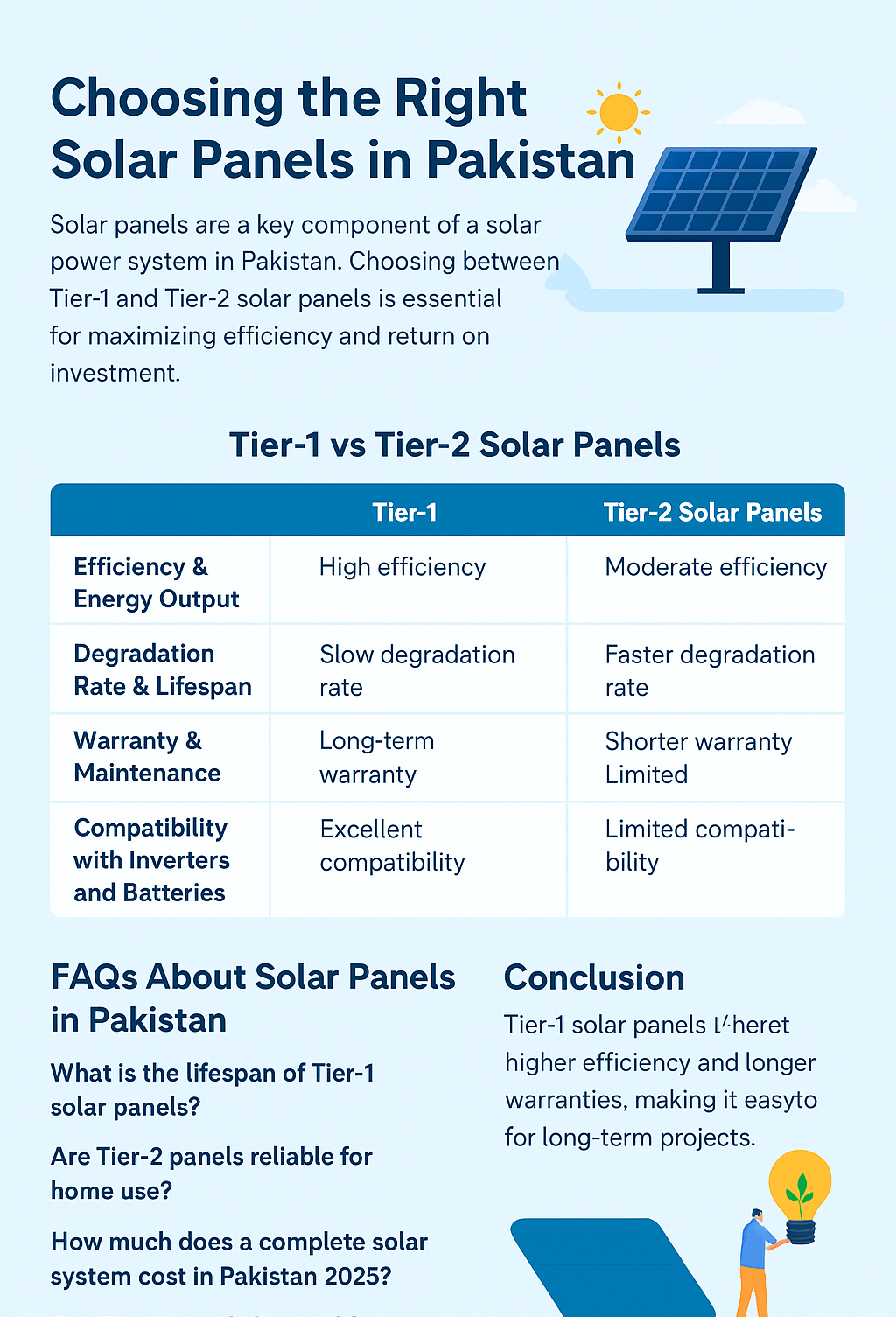
| Feature | Tier-1 Solar Panels | Tier-2 Solar Panels |
|---|---|---|
| Efficiency | High-efficiency; maintains output over time | Moderate efficiency; may degrade faster |
| PV Module Quality Ranking | Top global brands with certifications | Lower ranking; varies by manufacturer |
| Warranties | Long-term (20–25 years) | Shorter (10–15 years) |
| Durability & Lifespan | Excellent panel durability and lifespan | Moderate durability; faster degradation |
| Example Brands | Trina Solar, Jinko Solar, Canadian Solar | Local or regional brands commonly used in Pakistan |
| Cost | Higher upfront investment | More affordable upfront |
| Best For | Long-term commercial & residential projects | Budget-conscious or small-scale installations |
Tier-1 Vs Tier-2 Solar Panels Price in Pakistan
Understanding the price differences between Tier-1 and Tier-2 solar panels is essential for making an informed investment in solar energy. Prices can vary based on panel type, brand, and system size, but here’s a general overview:
Residential Solar Panel Pricing
For homeowners in Pakistan, the cost of solar panels is a significant consideration. As of August 2025:
-
Tier-1 Solar Panels: High-quality panels from reputable brands like Jinko, Longi, and Canadian Solar typically range from PKR 31 to PKR 38 per watt.
-
Tier-2 Solar Panels: More affordable options from local or lesser-known brands are available at approximately PKR 28 to PKR 31 per watt.
Considering a 5 kW system:
-
Tier-1 System: Approximately PKR 150,000 to PKR 190,000
-
Tier-2 System: Approximately PKR 140,000 to PKR 155,000
Note: Prices may vary based on brand, efficiency, and market conditions.
Commercial & Industrial Solar Panel Pricing
For businesses and industrial applications:
-
Tier-1 Solar Panels: Bulk purchases of high-efficiency panels can cost between PKR 30 to PKR 35 per watt.
-
Tier-2 Solar Panels: More budget-friendly options range from PKR 27 to PKR 30 per watt.
A 20 kW system:
-
Tier-1 System: Approximately PKR 600,000 to PKR 700,000
-
Tier-2 System: Approximately PKR 540,000 to PKR 600,000
Note: Prices may vary based on brand, efficiency, and market conditions.
Imported vs Local Panels
The choice between imported and locally sourced panels affects both cost and performance:
-
Imported Panels: Typically higher in price due to import duties and taxes but offer superior efficiency and longer warranties.
-
Local Panels: More affordable upfront but may have shorter lifespans and less robust performance.
Note: Import taxes on solar panels have increased to support local manufacturing, which can affect overall costs for imported panels.
Investing in solar energy is a significant decision. While Tier-1 panels offer higher efficiency and longer warranties, Tier-2 panels can provide a more affordable entry point. Consider your energy needs, budget, and long-term goals when choosing the right solar solution for your home or business.
| Category | Tier-1 Solar Panels | Tier-2 Solar Panels |
|---|---|---|
| Residential Pricing (5 kW) | PKR 150,000 – PKR 190,000 | PKR 140,000 – PKR 155,000 |
| Cost per Watt (Residential) | PKR 31 – PKR 38 | PKR 28 – PKR 31 |
| Commercial/Industrial Pricing (20 kW) | PKR 600,000 – PKR 700,000 | PKR 540,000 – PKR 600,000 |
| Cost per Watt (Commercial) | PKR 30 – PKR 35 | PKR 27 – PKR 30 |
| Imported vs Local Panels | Higher upfront cost; longer warranty and higher efficiency | Lower upfront cost; shorter lifespan and faster degradation |
| Best For | Long-term residential and commercial projects | Budget-conscious or small-scale installations |
Performance Comparison
When choosing between Tier-1 and Tier-2 solar panels, performance is just as important as price. A panel’s efficiency, durability, and compatibility with your solar system determine long-term savings and reliability. Let’s dive into the key factors.
Efficiency & Energy Output
Tier-1 solar panels are known for their high solar panel efficiency, converting more sunlight into electricity consistently over time. This means homeowners and businesses can generate more energy from the same rooftop or space, maximizing ROI. Tier-2 panels, while more affordable, often produce slightly lower energy output and may be less efficient in extreme weather conditions.
High efficiency directly contributes to better long-term solar savings, especially for commercial or larger residential systems, where even small differences in output can add up significantly over the years.
Degradation Rate & Lifespan
Over time, all solar panels experience some degradation. Tier-1 panels have a slower degradation rate, typically losing only about 0.5% of efficiency per year, allowing them to maintain performance for 25 years or more. Tier-2 panels may degrade faster, which can reduce energy output and affect solar power system reliability in the long run.
Choosing panels with a longer lifespan ensures fewer replacements and more consistent energy generation, which is crucial for achieving sustainable savings.
Warranty & Maintenance
Tier-1 solar panels come with longer warranties—often 25 years—covering both performance and product quality. Tier-2 panels usually offer shorter warranties of 10–15 years. A strong warranty not only provides peace of mind but also reduces unexpected maintenance costs, making it a critical factor in long-term planning.
Regular maintenance, such as cleaning and inspection, is recommended for both tiers, but Tier-1 panels tend to require fewer interventions due to higher durability and build quality.
Compatibility with Inverters and Batteries
A reliable solar setup isn’t just about panels—it’s about the entire system working together. Tier-1 panels generally have higher solar inverter and battery compatibility, ensuring optimal performance with hybrid or off-grid systems. Tier-2 panels may have some limitations, requiring careful matching with inverters and batteries to prevent energy losses or system issues.
By choosing panels with better system compatibility, you enhance overall efficiency, reduce downtime, and maximize the long-term solar savings for your home or business.
Factors to Consider Before Buying
Investing in solar energy in Pakistan is more than just picking a panel—it’s about making decisions that balance cost, efficiency, and long-term benefits. Here are the key factors you should consider before making your purchase:
Budget Constraints vs Long-Term Savings
Your budget will often dictate whether you go for Tier-1 or Tier-2 solar panels. While Tier-1 panels have a higher upfront solar installation cost, their superior efficiency, slower degradation, and longer warranties mean better solar system ROI over time. Tier-2 panels may save you money initially but could result in higher replacement and maintenance costs down the road.
Residential vs Commercial Requirements
Residential systems typically require smaller setups and focus on consistent electricity supply for daily use. Commercial or industrial projects, on the other hand, demand higher capacity, greater durability, and reliable energy output to ensure business continuity. Choosing the right system size and panel tier according to your needs is crucial for maximizing long-term solar savings.
Availability of Certified Installers
A solar system’s performance isn’t just about the panels—it’s also about installation quality. Certified installers ensure proper setup, optimal panel alignment, and compatibility with inverters and batteries. Using experienced professionals helps protect your investment and enhances solar power system reliability.
Government Incentives and Net Metering Policies
Pakistan offers several government solar incentives Pakistan, including subsidies and tax benefits for renewable energy projects. Additionally, net metering Pakistan allows you to feed excess electricity back into the grid, effectively lowering your electricity bills and improving ROI. Being aware of these policies can help you choose the right system while maximizing financial benefits.
By carefully evaluating your budget, energy needs, installer options, and government incentives, you can make an informed decision that ensures both immediate savings and long-term benefits from your solar investment.
Pros and Cons of Tier-1 and Tier-2 Panels
Choosing the right solar panels involves weighing the benefits and drawbacks of each tier. Understanding the PV module quality ranking and other key factors can help you make a smart investment in solar energy Pakistan.
Tier-1 Solar Panels
Advantages:
-
High efficiency and consistent energy output.
-
Superior durability and longer lifespan.
-
Strong brand reputation with globally certified manufacturers.
-
Ideal for long-term residential or commercial projects, ensuring reliable energy independence solutions.
Disadvantages:
-
Higher upfront cost, which can affect short-term budget planning.
-
Slightly limited availability compared to local Tier-2 brands.
Tier-2 Solar Panels
Advantages:
-
Lower initial cost, making them more accessible for budget-conscious buyers.
-
Easier availability from local suppliers, ideal for small-scale projects.
-
Useful for shorter-term or experimental solar installations.
Disadvantages:
-
Shorter lifespan and faster degradation over time.
-
Slightly lower energy output, which may affect overall commercial solar panel pricing and long-term savings.
Tier-1 vs Tier-2 Panels: Pros and Cons Table
| Feature | Tier-1 Solar Panels | Tier-2 Solar Panels |
|---|---|---|
| Efficiency & Output | High; maintains performance over time | Moderate; may produce less energy |
| Durability & Lifespan | Long-lasting; slower degradation | Shorter lifespan; faster efficiency loss |
| Brand Reputation | Globally recognized brands | Local or lesser-known brands |
| Upfront Cost | Higher initial investment | Lower initial cost |
| Availability | Slightly limited; mostly imported | Widely available locally |
| Best For | Long-term residential & commercial projects | Budget-conscious or small-scale installations |
| Energy Independence Solutions | Excellent; reliable performance | Moderate; may require future replacements |
| Commercial Solar Panel Pricing | Higher per watt but better ROI | Lower per watt but lower long-term savings |
Which One Should You Buy in Pakistan?
Choosing the right solar panel can feel overwhelming, but focusing on your budget, energy needs, and system size can simplify the decision. Whether you’re a homeowner or running a commercial project, understanding the differences between Tier-1 and Tier-2 panels helps you make a smart, long-term investment.
Residential Projects
For most households, energy demands are moderate, but consistency and reliability matter. Tier-1 solar panels are ideal if you want high efficiency, longer lifespan, and minimal maintenance. While the upfront cost is higher, the long-term savings and enhanced energy production often justify the investment.
Tier-2 panels are a viable option if you have a limited budget and are willing to accept slightly lower efficiency. They’re suitable for smaller setups or temporary solutions, but you may need to plan for replacements sooner.
Commercial & Industrial Projects
Businesses and industrial setups require larger solar systems to cover higher energy loads. Here, a bulk solar panel purchase Pakistan is common, and Tier-1 panels are usually the recommended choice due to their superior solar system reliability, better warranties, and proven performance. This ensures minimal downtime and consistent energy output, maximizing ROI.
Tier-2 panels can be considered for smaller commercial setups or pilot projects, but their shorter lifespan and potential for faster degradation may impact long-term solar savings.
Balancing Upfront Cost vs Long-Term Benefits
Ultimately, your choice comes down to balancing short-term budget constraints with long-term benefits. A Tier-1 system may feel expensive initially but provides higher energy output, lower maintenance, and greater durability, making it cost-effective over 20–25 years. Tier-2 panels may save money upfront, but lower efficiency and faster degradation could increase overall costs over time.
By considering your energy requirements, project size, and financial goals, you can make an informed decision that aligns with your needs. This Tier-1 vs Tier-2 comparison ensures you select the best solar panels for your home or business in Pakistan.
FAQs
What is the lifespan of Tier-1 solar panels?
Tier-1 solar panels are renowned for their high quality and durability. On average, these high-quality solar panels last 25 years or more with minimal efficiency loss. Thanks to a slower solar panel degradation rate of around 0.5% per year, they maintain consistent energy output, making them a reliable long-term investment for both homes and commercial projects.
Are Tier-2 panels reliable for home use?
Tier-2 panels can be suitable for residential use, especially for those on a tighter budget. While they generally have lower efficiency compared to Tier-1 panels, they can still meet typical home energy needs. However, their higher solar panel degradation rate and shorter warranties mean long-term performance should be carefully considered in a solar panel warranty comparison.
How much does a complete solar system cost in Pakistan 2025?
The cost of a complete solar system depends on the panel type, system size, and installation quality. As of 2025:
-
Tier-1 panels: 5 kW residential system costs PKR 150,000 to PKR 190,000.
-
Tier-2 panels: 5 kW system costs PKR 140,000 to PKR 155,000.
Commercial and industrial systems vary depending on size and bulk purchases, with Tier-1 systems offering better long-term ROI despite a slightly higher solar installation cost.
Can Tier-2 panels be used for industrial projects?
Tier-2 panels can be used for industrial setups, but they may not be ideal for large-scale projects that demand high energy efficiency and consistent output. For better solar power system reliability and minimal maintenance, high-quality solar panels (Tier-1) are recommended, as Tier-2 panels may degrade faster and impact overall energy production.
Conclusion
Choosing the right solar panels in Pakistan is a crucial step toward reliable, cost-effective, and sustainable energy. Tier-1 and Tier-2 panels each have their strengths and trade-offs. Tier-1 panels stand out for their high efficiency, long lifespan, and proven reliability, making them ideal for both residential and commercial projects with a focus on long-term solar savings. Tier-2 panels, on the other hand, offer lower upfront costs and easier availability, making them a good option for smaller projects or budget-conscious buyers, though they may require replacements sooner.
Ultimately, the choice comes down to balancing your budget against long-term benefits. While Tier-1 panels require a higher initial investment, their superior performance and durability often result in better solar system ROI over time. Tier-2 panels may save money initially but could incur higher costs in maintenance and replacements down the road.
For the best results, it’s highly recommended to consult certified installers who can assess your energy needs, roof space, and system size to provide personalized guidance. Making an informed decision today ensures reliable energy, reduced electricity bills, and a more sustainable future for your home or business.