In today’s fast-paced world, small businesses in Pakistan face ever-increasing operational costs. Among them, electricity bills are often the biggest burden, especially for shops and small enterprises relying heavily on lighting, cooling, and electronic equipment. T
his is where solar power solutions for SMEs come in as a game-changer. By harnessing the sun’s energy, small businesses can not only reduce costs but also take a step toward sustainability.
Importance of Solar Energy for Shops and Small Enterprises
For small businesses, consistent energy supply is crucial. Frequent power outages and load shedding in Pakistan make traditional electricity sources unreliable. Installing solar panels ensures that your shop or enterprise can operate smoothly without interruptions. Beyond reliability, solar energy allows business owners to plan long-term savings and invest more confidently in growth, knowing their energy needs are being met sustainably.
Benefits of Solar Energy for Small Businesses
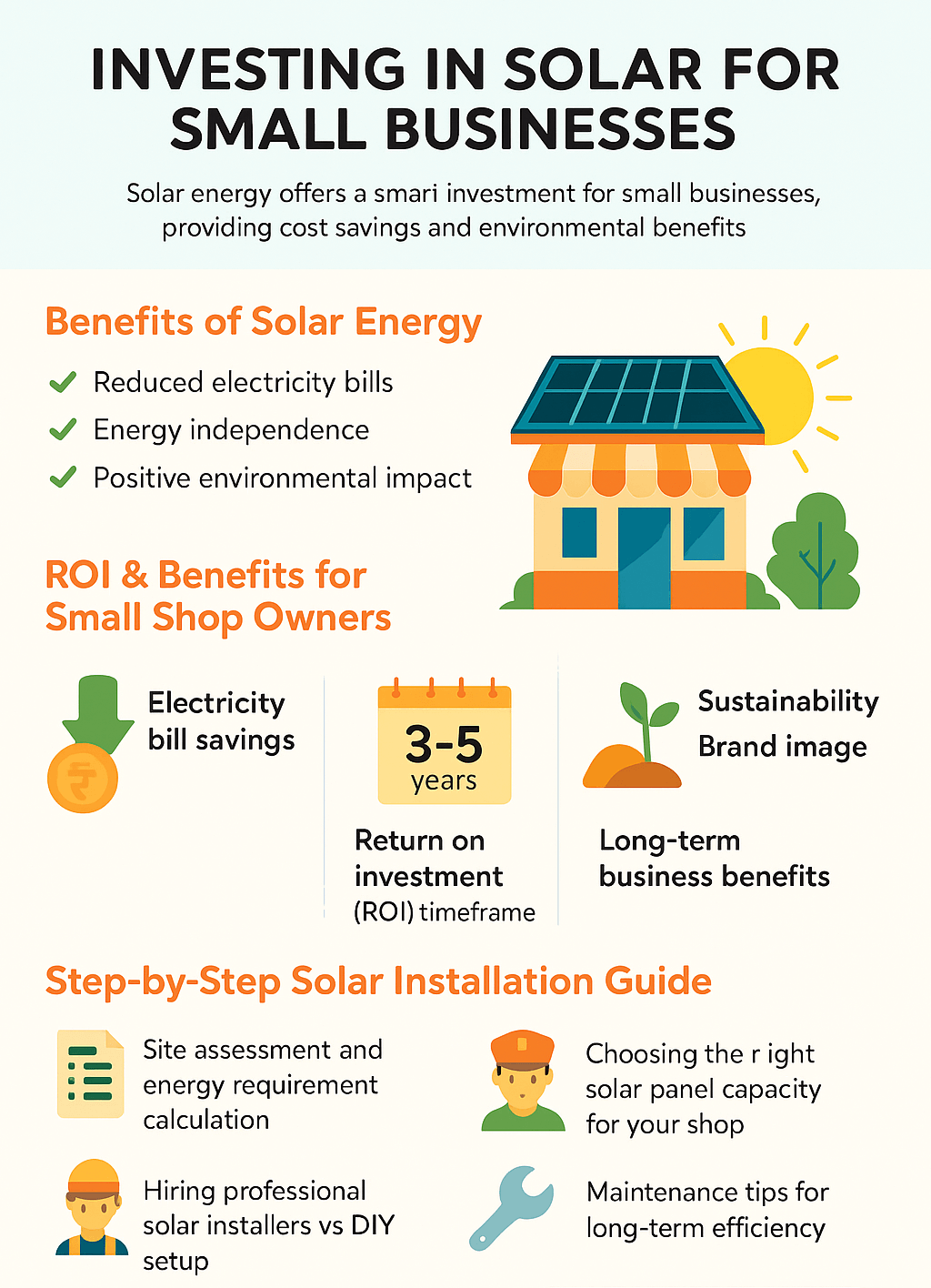
1. Reduced Electricity Bills
One of the most immediate advantages of switching to solar is lower electricity bills. By generating your own power, you decrease dependency on the grid, saving substantial amounts over time. For small shops and enterprises, these savings can be redirected to business expansion, employee benefits, or inventory improvements.
2. Energy Independence
Relying solely on conventional electricity sources makes businesses vulnerable to price hikes and load-shedding schedules. Solar energy provides autonomy, letting business owners control their energy usage and avoid sudden shocks from rising electricity tariffs in Pakistan.
3. Positive Environmental Impact
Switching to solar isn’t just a smart financial decision—it’s also an environmentally responsible one. Using renewable energy reduces carbon footprints and promotes sustainability, helping your business contribute to a greener Pakistan. This can also resonate with environmentally-conscious customers, enhancing your brand image.
Pakistan-Specific Context
In Pakistan, electricity costs have been climbing steadily, affecting small businesses across all sectors. Fortunately, renewable energy solutions in Pakistan have become more accessible than ever. Solar panels, inverters, and energy storage systems are now widely available, making it feasible for small shops to adopt clean energy without huge upfront investments. Solutions like shop energy savings solar setups are specifically designed to cater to SMEs, balancing cost efficiency with energy output.
By embracing solar energy, small business owners in Pakistan can enjoy financial savings, operational reliability, and environmental responsibility—all while positioning their businesses as modern and forward-thinking. Making the switch today could be the smartest investment for your shop’s future.
Types of Solar Panels Suitable for Small Shops
Choosing the right solar panel is a critical step for small shops and businesses looking to invest in renewable energy. Not all panels are created equal, and understanding the differences can help you maximize efficiency while staying within budget.
Monocrystalline vs Polycrystalline Panels
Monocrystalline solar panels are known for their high efficiency and sleek design. Made from single-crystal silicon, they convert sunlight into electricity more effectively than other types, making them ideal for shops with limited roof space. Though their upfront cost is slightly higher, their long lifespan and consistent performance often justify the investment.
On the other hand, polycrystalline solar panels are more affordable and still provide reliable energy output. They are made from multiple silicon crystals, which slightly reduces efficiency compared to monocrystalline panels. For small businesses with ample roof space and moderate energy needs, polycrystalline panels can be a cost-effective solution without compromising quality.
Efficiency, Cost, and Lifespan Comparison
When deciding between monocrystalline and polycrystalline solar panels, consider:
-
Efficiency: Monocrystalline panels typically achieve 18-22% efficiency, while polycrystalline panels average 15-17%.
-
Cost: Polycrystalline panels are usually 15-20% cheaper upfront.
-
Lifespan: Both types last 25 years or more, but monocrystalline panels often retain performance slightly better over time.
Best Solar Panel Brands for Commercial Use
Investing in a commercial solar panel system means prioritizing quality and durability. Leading brands such as Trina Solar, Jinko Solar, and Canadian Solar offer high-efficiency panels that are widely used in Pakistan for both small shops and large-scale commercial setups. These brands are known for reliable warranties, robust construction, and proven performance in various climates—making them a safe choice for businesses looking for long-term energy savings.
How Solar Systems Work for Small Businesses
Investing in solar energy for your shop or small business in Pakistan is not just about installing panels on the roof—it’s about creating a reliable, efficient energy system that meets your daily electricity needs. Understanding how solar systems work can help you make informed decisions and maximize your savings.
Key Components of a Solar System
A typical solar setup for small businesses includes several essential components:
-
Solar Panels: These capture sunlight and convert it into electricity.
-
Solar Inverter for Small Business: The inverter converts the DC electricity from panels into AC electricity, which powers your shop’s equipment.
-
Batteries: Store excess energy generated during the day, allowing your business to use it at night or during power outages.
-
Wiring and Safety Equipment: Proper wiring ensures electricity flows efficiently and safely throughout your rooftop solar installation.
Grid-Tied vs Off-Grid vs Hybrid Solar Systems
Choosing the right system depends on your business needs and energy goals:
-
Grid-Tied Systems: Connected to the main electricity grid, these systems allow your shop to draw power from the grid when solar production is low and sell excess energy back in some cases.
-
Off-Grid Systems: Fully independent from the grid, ideal for areas with frequent power outages, but require larger battery storage.
-
Hybrid Solar Systems for Shops: Combine the benefits of both grid-tied and off-grid systems. They use solar power when available, store excess energy in batteries, and tap into the grid as a backup—offering maximum reliability and flexibility.
Solar Battery Storage Options for Business
Solar batteries are a game-changer for small shops that want uninterrupted power supply. From lead-acid to lithium-ion options, battery storage lets businesses store surplus energy during the day and use it whenever needed. This not only ensures energy independence but also helps manage peak electricity costs efficiently.
Cost of Solar Panels for Small Shops in Pakistan (2025)
Switching to solar energy is one of the smartest decisions for small business owners in Pakistan, not only for saving on electricity bills but also for contributing to a cleaner environment. Understanding the solar system cost in Pakistan 2025 is essential before taking the plunge. Let’s break down the numbers and see what fits best for your shop.
Average Prices for Different Capacities
The cost of solar panel systems largely depends on the size of your business and daily electricity usage. Here’s an overview of average prices for small shop setups:
-
1 kW Solar System: Ideal for very small shops with minimal power needs. Prices typically range from PKR 90,000 to 120,000, depending on the brand and quality of panels and inverters.
-
3 kW Solar System: Suitable for small to medium shops. Expect to pay around PKR 250,000 to 300,000. This capacity can handle multiple appliances like lights, fans, and small machinery.
-
5 kW Solar System: Best for larger shops or those running heavy equipment. The price generally falls between PKR 400,000 and 500,000, offering robust energy support and significant savings on monthly electricity bills.
| System Capacity | Ideal For | Average Price (PKR) | Inverter & Battery Cost | Notes |
|---|---|---|---|---|
| 1 kW Solar System | Very small shops with minimal power needs | 90,000 – 120,000 | Inverter: 60,000–90,000Battery (100–200 Ah): 40,000–70,000 | Can handle basic lighting and a few small appliances |
| 3 kW Solar System | Small to medium shops | 250,000 – 300,000 | Inverter: 60,000–90,000Battery (100–200 Ah): 40,000–70,000 | Supports multiple lights, fans, and small machinery |
| 5 kW Solar System | Larger shops or shops with heavy equipment | 400,000 – 500,000 | Inverter: 60,000–90,000Battery (100–200 Ah): 40,000–70,000 | Provides robust energy support and significant electricity savings |
Inverter and Battery Cost Breakdown
A crucial part of your solar setup is the inverter and battery. These components ensure uninterrupted power supply, especially during load shedding:
-
Inverter: A 3 kW inverter costs approximately PKR 60,000–90,000, depending on efficiency and brand.
-
Battery: For small shops, a 100–200 Ah battery costs around PKR 40,000–70,000. High-quality batteries last longer and provide better backup.
Total Setup Cost and Payback Period
Combining panels, inverters, batteries, and installation, a 3 kW system can cost around PKR 300,000–350,000. While the upfront investment may seem significant, the payback period for solar installation is typically 3 to 4 years, after which your electricity costs drop significantly. Over a 15–20 year lifespan, the savings can be substantial, making it a cost-effective solar panel system for small businesses.
Tips to Reduce Upfront Costs
Investing in solar energy doesn’t always have to be expensive. Here are some practical ways to lower the initial cost:
-
Government Subsidies and Incentives: Pakistan offers certain solar incentives for businesses to encourage renewable energy adoption. Check with local authorities for eligibility.
-
Gradual Installation: Start with a smaller system and expand as your energy needs grow.
-
Quality over Quantity: Opt for high-efficiency panels; they might cost slightly more initially but save more in the long run.
-
Local Dealers and Bulk Offers: Buying from verified local suppliers can reduce import costs and offer better deals.
Switching to solar not only reduces your monthly electricity bills but also adds value to your shop as an eco-conscious business. With smart planning and the right setup, solar panels can be a long-term investment that pays off financially and environmentally.
Step-by-Step Solar Installation Guide
Installing a solar system for your small business in Pakistan doesn’t have to be overwhelming. With a clear plan and the right guidance, you can transition to clean energy smoothly and efficiently. Here’s a step-by-step solar installation guide to help you get started.
1. Site Assessment and Energy Requirement Calculation
The first step in any solar installation is a thorough site assessment. A professional evaluation of your rooftop or available space ensures that your shop receives optimal sunlight throughout the day. Simultaneously, calculating your energy requirements—based on monthly electricity bills and equipment usage—helps determine the size and capacity of the solar system needed.
2. Choosing the Right Solar Panel Capacity for Your Shop
Selecting the correct solar panel capacity is crucial for both efficiency and cost-effectiveness. Too small a system may not meet your energy needs, while an oversized system can lead to unnecessary expenses. Consider factors like peak energy usage, available roof space, and potential future growth of your business to choose the best configuration for your shop.
3. Hiring Professional Solar Installers vs DIY Setup
While some business owners consider a DIY approach, hiring professional solar installers near me ensures that your system is installed safely, efficiently, and in compliance with local regulations. Experts handle technical aspects like wiring, inverter setup, and grid connection, minimizing risks and saving you time. A professionally installed system typically performs better and lasts longer.
4. Maintenance Tips for Long-Term Efficiency
Regular maintenance is key to keeping your solar system running at peak efficiency. Simple practices like cleaning panels, checking battery health, inspecting wiring, and monitoring inverter performance can prevent issues before they become costly. Following solar maintenance tips for businesses ensures consistent energy output and prolongs the life of your investment.
ROI & Benefits for Small Shop Owners
Switching to solar energy isn’t just about being eco-friendly—it’s a smart business decision for small shop owners in Pakistan. Investing in a solar system can deliver tangible financial returns, while also offering long-term advantages that go beyond electricity bills.
Electricity Bill Savings
One of the most immediate benefits of installing solar panels is business electricity cost reduction. By generating your own power, your shop becomes less dependent on the national grid, protecting you from rising electricity prices. Over time, these savings can accumulate significantly, freeing up funds for inventory, staff, or expansion.
Return on Investment (ROI) Timeframe
A well-planned solar installation offers a clear solar ROI for small enterprises. Typically, small businesses in Pakistan can recover their investment within 3 to 5 years, depending on system size and energy consumption. After this period, the energy generated is essentially free, creating long-term financial relief and predictable operational costs.
Long-Term Business Benefits
Beyond immediate savings, solar energy provides several enduring advantages for small shops:
-
Energy Independence for Small Businesses: A solar system reduces reliance on the grid and shields your shop from power outages and load shedding, ensuring uninterrupted operations.
-
Sustainability: Adopting renewable energy positions your business as environmentally responsible, which can resonate with eco-conscious customers.
-
Enhanced Brand Image: Demonstrating commitment to clean energy can improve your reputation, attract customers, and even differentiate your shop from competitors in your community.
FAQs
How long does a solar panel last for a shop?
A high-quality solar panel typically lasts 20 to 25 years with minimal performance loss. Most reputable brands also offer a warranty of 10–25 years, ensuring your investment is protected. Regular cleaning and proper maintenance can further extend the solar panel lifespan, making it a reliable solution for small shops looking for long-term savings.
Can hybrid solar systems fully replace grid electricity?
Yes, hybrid solar systems for shops can significantly reduce dependence on the national grid. These systems combine solar panels with batteries and, in some cases, grid connectivity. While they can handle most of your daily energy needs, the ability to fully replace grid electricity depends on your shop’s consumption and battery storage capacity. For small to medium shops, hybrid setups often provide a smooth, uninterrupted power supply even during load shedding.
What is the best solar battery for commercial use?
For small shops, choosing the right battery is crucial to ensure backup during peak hours. Lead-acid and lithium-ion batteries are the most common options:
-
Lead-acid batteries are more affordable but require regular maintenance.
-
Lithium-ion batteries cost more upfront but are more efficient, durable, and maintenance-free.
Selecting the right battery depends on your shop’s energy usage and the desired backup duration. Pairing it with a high-quality inverter ensures optimal performance.
Are professional installers necessary for small shops?
While some entrepreneurs consider a DIY solar setup for shops, professional installation is highly recommended. Certified installers ensure correct panel placement, secure wiring, and proper system configuration, which improves efficiency and safety. Professional setups also often come with installation warranties, giving shop owners peace of mind.
Conclusion
Investing in solar energy is one of the smartest moves a small business owner in Pakistan can make today. From business electricity cost reduction to energy independence for small businesses, solar systems offer both immediate savings and long-term benefits. By reducing electricity bills, gaining reliable energy supply, and enhancing your shop’s brand image, a solar investment pays off financially and environmentally.
Using this cost and setup guide, you now have a clearer understanding of the right solar panels, system types, installation steps, and maintenance tips tailored for small shops and enterprises in Pakistan. This knowledge empowers you to make informed decisions and choose a solar solution that fits your business needs perfectly.
Ready to take the next step? Reach out to professional solar installers near me or request a personalized quote today. Switching to solar not only secures a stable energy future for your business but also contributes to a greener, more sustainable Pakistan.